
With 2020 in the rear view and 2021 starting with more of a stutter than a bang, we are looking at what was once our “new normal” becoming just…life. As Forbes recently reported, 74% of CFOs intend to accommodate at least some employees working remotely for the foreseeable future. This (gestures to quickly constructed home office) is here to stay. Gone are the days of heading out for coffee with your office bestie or ducking into a conference room to hash out an idea, and in are the days of spotty internet connections and “can you hear me?” While it is nice to connect with your team over video calls and chat, the spontaneity and authentic connection we once had feels strained. Technology, pets, kids, and oh yeah, a pandemic, provide us all with distractions aplenty.
So, if the path we’re on now is an all-virtual or more flexible work environment, how do leaders make sure that distractions don’t result in disengagement and strained interactions don’t result in poor communication? One thing is for sure, organizational culture will emerge from the haze of the pandemic in a different place than where it started. In fact, it is already happening. Work relationships, communication, and employee expectations are transforming. We’ve coined this inevitable and important shift as The Virtual Culture Dilemma.
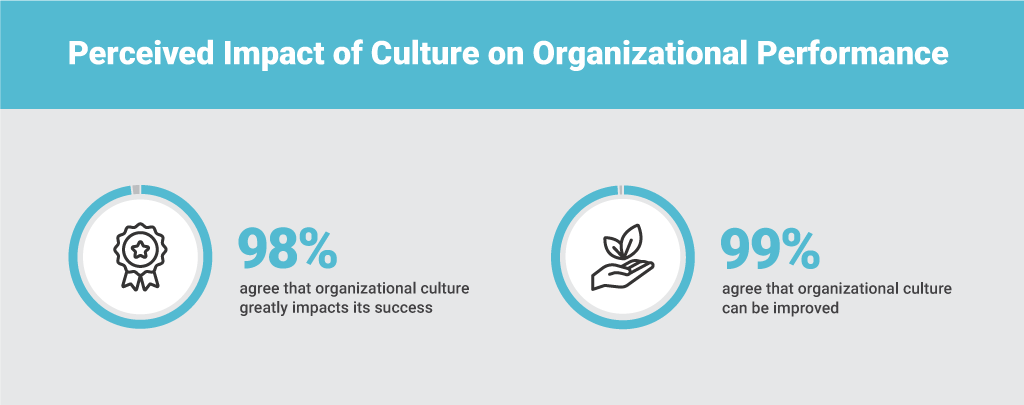
It is important that leaders are aware of The Virtual Culture Dilemma, because over time too many strained workplace interactions can add up to create a dysfunctional culture that drags down morale and performance. Waiting until things “get back to normal” is no longer an option and can ultimately hurt your bottom line. While it can seem daunting, taking the steps to improve your organizational culture is worth the investment. Wiley surveyed 2,500 business professionals and they agree culture has a significant impact on organizational performance and that with the right support, it can be improved.
So, what’s the best way to tackle The Virtual Culture Dilemma? Often, well-meaning leaders start with an aspirational mission statement or a new set of company values but struggle with how to transition words to long-term action. If leaders want to shape an engaged, collaborative, and adaptive culture, they need people who are engaged, collaborative, and adaptive – people who have those human skills to not only endure the very fluid work world but thrive in it.
Developing these qualities means developing the social and emotional know how of each individual. Soft skill development provides an opportunity for individuals to take all that is amazing (and challenging) about being human and dig deep to learn more about who we are, how we work, and how we relate to those around us. It is more important than ever to explore the details of what makes us human to help us reconnect in this virtual workplace.